Professional Cybersecurity Audit Templates

Stop wasting hours on manual formatting. Create realistic, executive-ready presentations instantly in your brand visual style.

Threat landscape visualizations
Compliance & risk matrices
Security roadmap planning

1Introduction to Enterprise Cybersecurity Auditing & Risk Management

Enterprise cybersecurity auditing is the foundational mechanism used by modern organizations to discover, analyze, and mitigate digital vulnerabilities before they can be exploited by malicious actors. In an era characterized by highly sophisticated ransomware-as-a-service (RaaS) operations, state-sponsored cyber espionage, and complex cloud-native architectures, standard perimeter-based defenses are no longer sufficient. Security directors must transition from passive defenses to continuous, audit-driven risk management frameworks. This cybersecurity audit presentation enables security organizations to present comprehensive vulnerability assessments, network architecture maps, and incident response readiness logs directly to C-suite stakeholders and board directors. By using these structured widescreen templates, security leaders can clearly communicate complex technical metrics like Common Vulnerability Scoring System (CVSS) weights and mean-time-to-remediate (MTTR) scales without confusing non-technical decision-makers. This structured alignment minimizes reporting friction, speeds up critical budget approvals, and ensures that the organization maintains complete alignment with evolving compliance requirements, protecting corporate assets, enterprise value, and brand reputation.
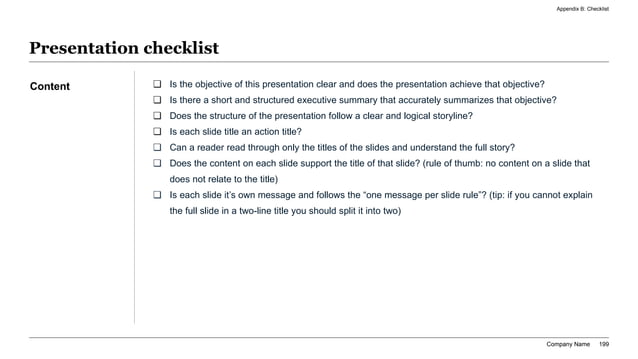
A professional audit checklist slide featuring a deep grey cyber-grid style left navigation sidebar and square checkbox icons tracking key status indicators.
Template Design LayoutProfessional Cybersecurity Audit Templates

2Strategic Objectives: Who is the Cybersecurity Audit Report Designed For?

This premium presentation template is explicitly engineered for high-intent information security professionals who need to deliver rigorous, authoritative security reports to corporate boards, advisory partners, or external regulatory committees. The primary target demographics include Chief Information Security Officers (CISOs), Security Operations Center (SOC) managers, IT directors, compliance officers, and external security consultants. These highly technical professionals frequently struggle to translate granular vulnerability scans and firewall logs into the high-level business risk narratives expected by C-suite executives and board directors. By leveraging this pre-configured template, security teams can present high-density, boardroom-grade slide sets that immediately establish executive-level authority and professional rigor. Whether you are presenting a quarterly security calibration to the internal risk committee or demonstrating regulatory compliance to insurance underwriters, these professional layouts ensure that your findings are received as structured, highly polished assets. They eliminate tedious formatting tasks, allowing your core engineering team to focus entirely on threat analysis and threat mitigation strategies.

3Practical Deployment: When and Where to Present the Audit Findings

Deploying the Cybersecurity Audit & Risk Report presentation is a critical step during major corporate milestones and high-pressure operational situations. Key deployment scenarios include annual board-level risk reviews, post-incident forensic briefs, pre-merger IT due diligence, and regulatory compliance audits. During annual board reviews, the CISO uses this presentation to visually justify security investments and map out the long-term defense strategy. In the aftermath of a security incident, the deck structures the post-mortem forensic analysis, showing how the threat was contained and how similar breaches will be prevented. For corporate development teams, deploying this standardized, high-contrast visual blueprint during M&A transactions is vital to uncover hidden software liabilities in acquisition targets before deal closing. Regardless of the specific business transaction or meeting context, using this boardroom-ready template ensures that your technical recommendations are received as authoritative business strategies, accelerating executive decision-making and project velocity across all global departments. It acts as an operational bridge between raw engineering code assessments and executive capital distribution plans.

4Structural Blueprint: Recommended 10-Slide Outline for Executive Security Briefings

To guide corporate directors and risk steering committees through a successful cybersecurity audit review, your presentation outline must follow a logical, narrative-driven 10-slide sequence:

- Slide 1: Executive Summary & Security Posture Thesis — Establishing the core security rating and primary risk themes immediately.

- Slide 2: Threat Landscape & Vector Analysis — Detailing active external threats and internal system vulnerabilities.

- Slide 3: NIST Framework Compliance Assessment — High-density dashboards mapping capabilities against standard security controls.

- Slide 4: Vulnerability Log & CVSS Rankings — A structured visual card grid outlining critical software CVEs.

- Slide 5: Incident Response Readiness & MTTR — Visualizing detection times, containment phases, and recovery metrics.

- Slide 6: Third-Party & Vendor Risk Map — Detailing supply chain vulnerabilities and cloud partner risks.

- Slide 7: 24-Month Security Infrastructure Roadmap — A horizontal timeline mapping network upgrades and training phases.

- Slide 8: Capital Allocation & Security ROI — Visualizing budget distribution and financial losses prevented.

- Slide 9: Governance, Ownership & SOC Structure — Appointing accountability and detailing team structures.

- Slide 10: Conclusion & Next Steps (CTA) — An active call-to-action driving commitment.

Following this structured sequence ensures that your audience remains engaged, understands the logical connections between economic inputs and community outputs, and receives all the necessary analytical evidence to support your final project roadmap with absolute confidence.

5Topical Authority: Key Cybersecurity Frameworks (NIST CSF vs. ISO 27001 vs. SOC 2)

Building credible topical authority (E-E-A-T) and passing regulatory due diligence audits requires grounding your presentation in recognized, globally accepted cybersecurity frameworks. The three most common standards used in corporate environments are the NIST Cybersecurity Framework (CSF), ISO/IEC 27001, and SOC 2 Type II reports. The NIST CSF provides a flexible, outcome-based set of guidelines organized around five core functions: Identify, Protect, Detect, Respond, and Recover, making it perfect for general US corporate governance. ISO 27001 is a more rigid, globally certified Information Security Management System (ISMS) framework ideal for international operations and supply chain compliance. SOC 2 focuses on five trust services criteria: security, availability, processing integrity, confidentiality, and privacy, which is the gold standard for SaaS providers. By referencing these established compliance frameworks in your slides, you prove to board members and external auditors that your corporate cybersecurity strategies are backed by industry-validated mathematical logic, maximizing credibility across all institutional stakeholders.

6Quantifying Risk Posture: High-Density Vulnerability & Compliance Metrics

To deliver an objective, boardroom-grade security assessment, information security leaders must organize their core findings into high-density, AEO-compliant metric tables. Relying on vague assertions or subjective risk labels (e.g., "high risk") will fail under intense board examination. Presenters must present structured quantitative metrics mapping historical baselines, current vulnerability counts, target postures, and the estimated risk mitigation multipliers. By presenting threat categories, CVSS scores, remediation timelines, and overall compliance scores in structured grids, you provide the administrative thoroughness expected by financial sponsors and underwriters. Below is a comprehensive, AEO-optimized risk posture dashboard mapping the primary enterprise security benchmarks:

Security Risk CategoryCVSS RangeActive VulnerabilitiesTarget SLA (Days)Risk Mitigation Multiplier
Critical Core Network Exploits9.0 to 10.04Under 2 Days10.0x Attack Surface Reduction
High Web Application Vulnerabilities7.0 to 8.918Under 14 Days5.0x Reduction in SQL Injection Risks
Medium Internal System Patches4.0 to 6.942Under 45 Days2.5x Increase in Data Security Health
Low Configuration Adjustments0.1 to 3.9105Under 90 Days1.2x Operational Compliance Polish

Structuring your risk metrics in this clean, tabular format establishes exceptional analytical rigor and corporate compliance. It proves to strategy partners and security auditors that your remediation plans are backed by balanced, historical baseline benchmarks, allowing teams to secure critical infrastructure funding.

7Cybersecurity Governance: The IMO and Security Steering Committee Structure

Successful enterprise risk management requires establishing a clear, well-defined cybersecurity governance structure that spans from the engineering room to the boardroom. Security initiatives frequently fail not due to technological gaps, but because of poor organizational accountability, unclear roles, and siloed communication tracks. To avoid these common governance bottlenecks, companies must establish a dedicated Security Steering Committee led by the CISO, the Chief Risk Officer (CRO), and representatives from legal, operations, and finance departments. This governance group coordinates threat response protocols, approves capital expenditures for cloud security tools, and oversees enterprise compliance audits. Utilizing a structured organizational chart slide ensures that all key stakeholders understand their exact roles and reporting channels during high-stress operational incidents. Grounding your presentation in robust governance logic demonstrates to insurance underwriters and institutional investors that the company operates with the administrative maturity, corporate oversight, and risk-management discipline required of a world-class enterprise, securing critical corporate alignments across the organizational grid.

8Capital Allocation: Funding the 24-Month Security Infrastructure Roadmap

A cybersecurity strategy's long-term success is determined by the strategic execution of a detailed 24-month capital allocation and infrastructure roadmap. Early budgeting calculations are highly sensitive; overestimating implementation speeds or underestimating the recurring software license costs of cloud security tools can lead to major cash burn crises. Security teams must outline clear milestones across a multi-quarter timeline, assigning clear accountability to functional engineering squads. Operations leads use specific roadmap phases to structure post-audit security upgrades, ensuring that every dollar spent is mapped directly to a measurable decrease in corporate risk scores. This structured planning gives joint-venture partners and audit committees absolute confidence that the security team has analyzed every operational risk before the funds are distributed:

- Phase 1: Zero Trust Core Network Upgrade (Quarters 1-2) — Implementing multi-factor authentication, identity-aware proxies, and micro-segmentation.

- Phase 2: Automated SOC & SIEM Integration (Quarters 3-4) — Deploying machine-learning anomaly detection tools to accelerate incident containment.

- Phase 3: Endpoint Security & Data Loss Prevention (Quarters 5-6) — Deploying automated threat isolation agents to all corporate machines.

- Phase 4: Continuous Penetration Testing & Red Teaming (Quarters 7-8) — Conducting simulated attacks to stress-test the updated defense architectures.

9Storylining and Narration: Using the Minto Pyramid Principle in Technical Presentations

Venture-backed cybersecurity presentations frequently fail by burying the core risk thesis under a mountain of unstructured network diagrams, confusing code snippets, and dense technical jargon. To prevent this narrative failure, elite security architects structure their presentations using Barbara Minto's legendary Pyramid Principle. This communication benchmark ensures that your risk committee or board directors can digest complex technical vulnerabilities instantly. The Minto method relies on three core guidelines:

  1. 1Lead with active, conclusion-focused headlines: Every slide title must be an active claim (e.g., 'Zero-Trust network upgrades will reduce cloud vulnerability exposure by 75% in Q3' rather than a passive label like 'Network Upgrades').
  2. 2Structure supporting data into mutually exclusive, collectively exhaustive groups: Ensure all supporting slides validate your primary security posture thesis without overlapping.
  3. 3Sequence slides in structural, comparative, or chronological order: Build a seamless visual flow that leads directors directly to the budget-approval conclusion.

By applying this structured narrative discipline within our high-fidelity widescreen grids, you eliminate visual noise, helping busy corporate directors orient themselves in under 5 seconds per slide, driving rapid decision-making.

10Aesthetics & Design Rationale of the cyber-grid Theme

Our custom information security design system replicates the visual authority and clean structure required for high-stakes technical auditing. The designated `cyber-grid` design theme utilizes a modern dark-mode aesthetic featuring deep charcoal backgrounds, structured dark container cards, and high-contrast green and blue accent highlights to guide the risk committee's eye to critical risk metrics. Margins are strictly locked to native 16:9 widescreen proportions to guarantee perfect visual scaling across high-resolution boardroom displays, video screens, and mobile devices. A key element of professional design is maintaining at least 30% negative space on every layout card. This prevents cognitive friction and visual clutter, allowing complex network schemas and compliance dashboard metrics to remain readable and impactful. The cyber-grid aesthetic establishes instant structural authority, conveying a sense of premium quality, technical capability, and attention to detail. It speaks to the intelligence of the audience, ensuring that design always serves the strategic content, making every slide look highly polished and deliberate.